

Floor Exercise for POTS — Why Horizontal Training Matters and What You Need
There is a philosophy embedded in dysautonomia rehabilitation that doesn't get stated plainly enough: you meet your nervous system where it is, not where you want it to be. For many POTS patients, where the nervous system currently is means the floor. Upright activity triggers symptoms. Standing at a counter triggers symptoms. A short walk triggers symptoms. The floor does not.
This isn't resignation. It's precision. The floor is a training environment with a specific property that makes it uniquely useful for dysautonomia rehabilitation: it eliminates orthostatic stress. When you're horizontal or near-horizontal, gravity is no longer asking your autonomic nervous system to do the thing it currently struggles to do reliably. That removal of challenge is what creates the window in which movement — and the neural adaptation that movement drives — becomes possible.
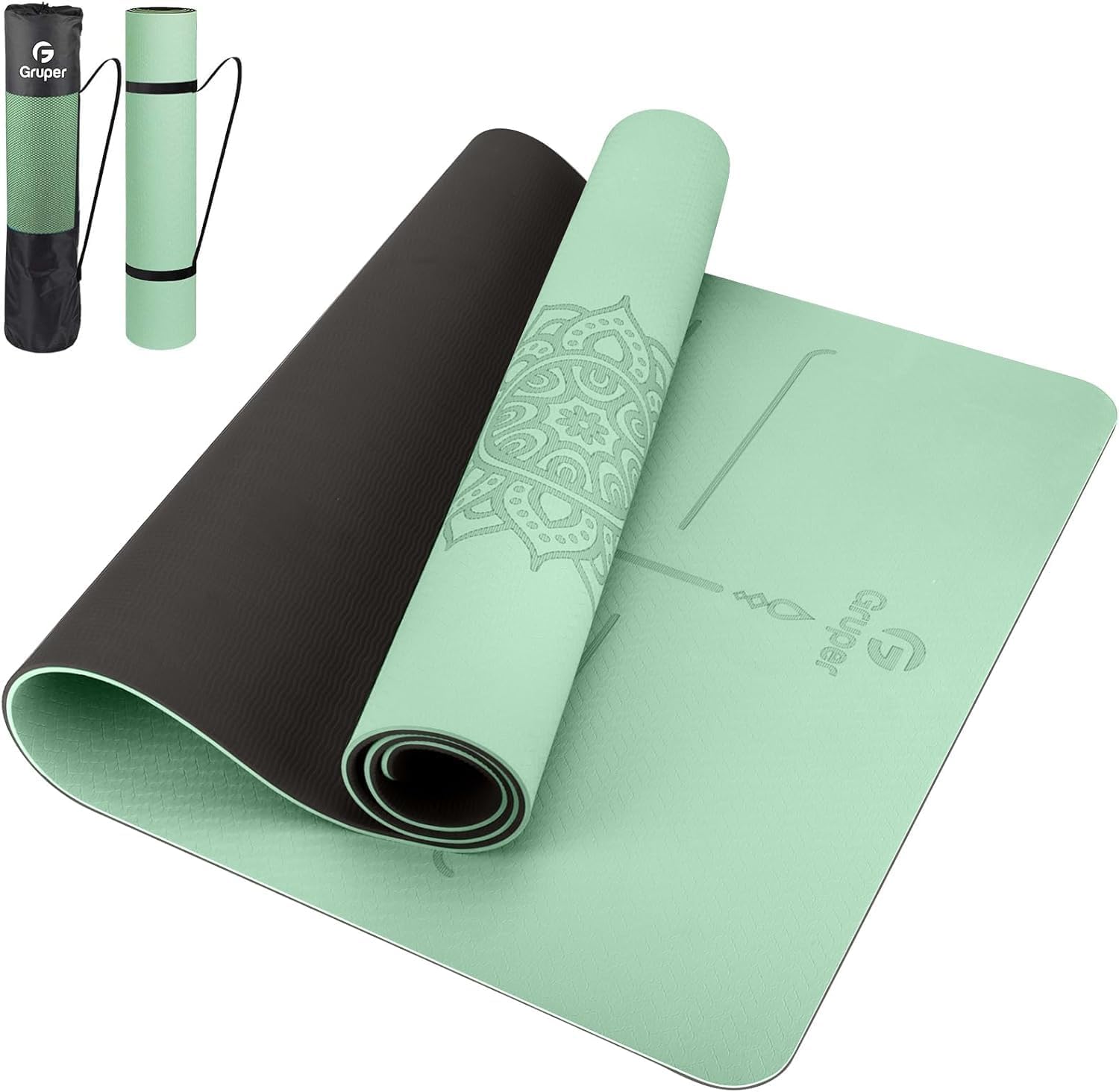
A quality exercise mat is the foundational piece of equipment for this approach. Not because floor exercise requires expensive gear, but because spending meaningful time on the floor, with joint conditions that are common in this population, with balance issues that make transitions risky, requires a surface that is adequately cushioned, stable, and large enough to actually move on.
Why the Floor Specifically
The autonomic nervous system's challenge in POTS isn't simply that blood pools in the legs when upright. It's that the brain's regulatory programs for managing cardiovascular function in upright posture have become unreliable. The baroreflex, the cerebrovascular autoregulation circuits, the neurovascular maps that govern vasoconstriction and heart rate under gravitational load — all of these are calibrated by experience, and when the experience of upright posture becomes consistently distressing, those calibrations drift.
Bed rest progressively degrades the baroreflex and cardiovascular reflexes that standing requires — which means complete rest isn't a neutral default. But full upright exercise isn't available either, not yet. Floor exercise is the middle path: movement that provides cardiovascular and neuromuscular stimulus without the orthostatic load that makes upright activity intolerable.
What floor exercise looks like in practice: supine leg raises, glute bridges, clamshells with resistance bands, prone back extensions, side-lying hip abduction, seated core work, slow transitions between supine and seated. None of these require standing. All of them provide meaningful muscle activation and proprioceptive feedback. The brain receives signals from a moving, active body — the raw material from which it rebuilds capacity — without being asked to simultaneously manage a cardiovascular challenge it can't yet meet.
The EDS Factor
A substantial portion of POTS patients also have hypermobility spectrum disorder or Ehlers-Danlos syndrome, and this changes the floor exercise calculation in important ways. EDS patients frequently experience joint pain from hard surfaces, instability during transitions, and hypermobile joints that are easily loaded into problematic positions without adequate cushioning and proprioceptive feedback underfoot.
Exercise intolerance in this population is a blood flow and delivery problem — but the solution has to be joint-compatible. A mat that's too thin will cause hip and shoulder pain during supine work. A mat that's too slippery will create instability hazards during any movement requiring traction. A mat that's too small will constrain range of motion and require uncomfortable proximity to furniture and walls.
A thicker mat with genuine non-slip texture isn't a luxury for this population. It's what makes floor exercise sustainable over days and weeks rather than something abandoned after two sessions because it causes new pain or creates instability.
Transitions as Training
One underappreciated benefit of floor-based exercise for POTS patients is that getting to and from the floor is itself a form of orthostatic training — done in small, controlled doses. The transition from lying to sitting engages the cardiovascular and autonomic systems in a partial orthostatic challenge. The transition from sitting to standing is a fuller one. Practicing these transitions slowly and deliberately, with recovery pauses, is one of the mechanisms through which capacity at greater orthostatic angles is eventually rebuilt.
This is the analog of learning calculus by starting with addition. You can't begin with a full standing workout when the brain's upright cardiovascular maps aren't functional yet. You begin horizontal, where function is available, and you practice the boundary conditions — the partial transitions — until the system has adapted enough to tolerate more. A mat that gives you stable, comfortable footing during those transitions is part of the infrastructure that makes consistent practice possible.
What to Look For
For POTS and EDS patients spending significant time on the floor, the relevant specifications are: thickness of at least 6mm, preferably more for joint protection; non-slip texture on both surfaces to prevent sliding on hard floors and to provide traction for hands and feet during movement; length adequate for full body extension (standard 68-inch mats work for most people); and material that doesn't retain heat uncomfortably for those with temperature dysregulation.
A mat is a modest investment that makes floor exercise consistent, comfortable, and safe. For a population where consistency over time is the mechanism of improvement, removing friction from the daily practice matters more than it might seem.