

Waist-High Compression Leggings for POTS — What the Research Actually Says
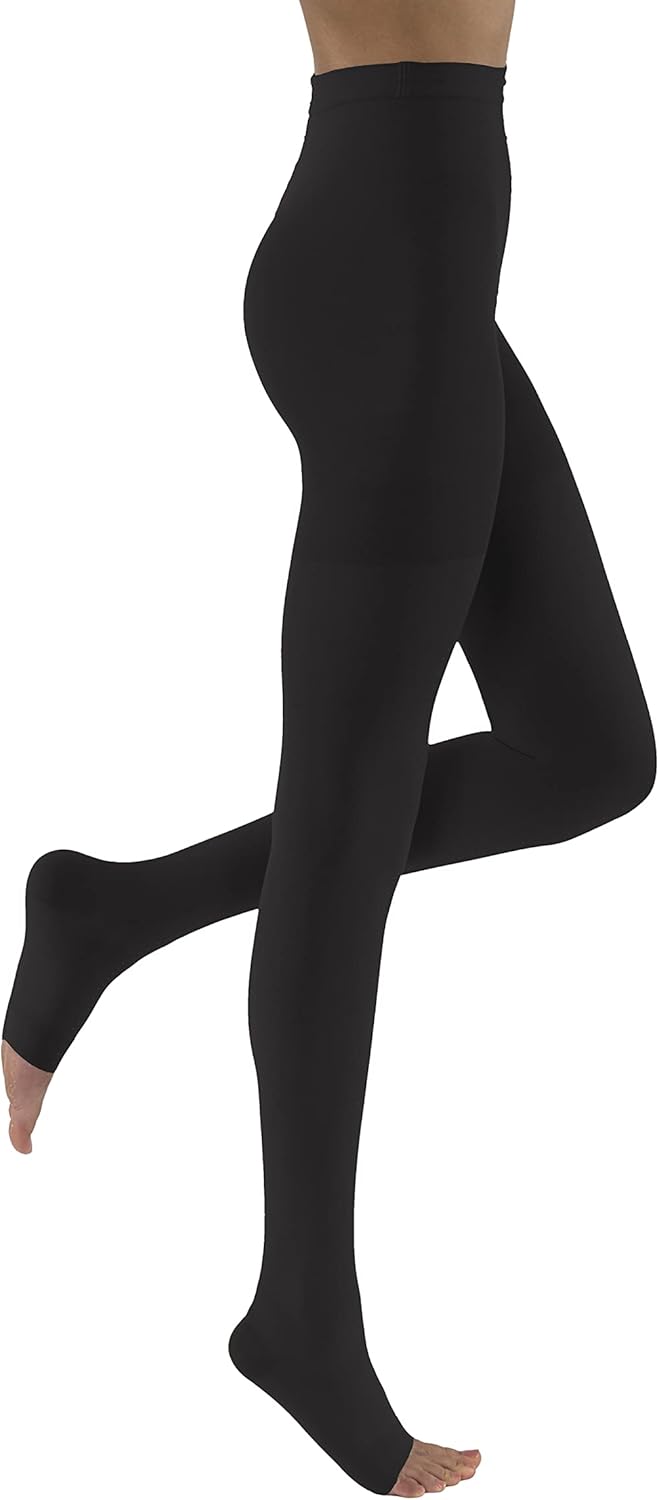
If you've been wearing knee-high compression socks and still struggling with significant orthostatic symptoms, the coverage gap above the knee may be part of the problem. Waist-high compression leggings — full-leg compression that extends through the thigh and includes abdominal coverage — address a physiological territory that knee-highs simply cannot reach. For a substantial proportion of POTS patients, this additional coverage is the difference between marginal benefit and meaningful symptom control.
The reason comes down to where the autonomic regulatory burden is concentrated — and it is not always where people assume.
The Splanchnic Contribution to Orthostatic Intolerance
The splanchnic circulation — the extensive vascular bed that supplies the gut, liver, spleen, and related organs — is one of the largest capacitance regions in the body. It holds a substantial reserve of blood volume that must be redistributed during the transition from lying to standing. Under normal circumstances, the autonomic nervous system coordinates splanchnic vasoconstriction in parallel with the orthostatic shift, limiting how much volume remains sequestered in the abdominal vascular bed while upright.
When that regulatory coordination is impaired — as is characteristic of dysautonomia — the splanchnic bed may remain inappropriately vasodilated during standing. This is not a passive overflow. It reflects the same upstream problem as peripheral vascular dysregulation: the issue in POTS is where blood goes and why the regulatory system isn't directing it appropriately, not simply a matter of total blood volume being insufficient.
Abdominal compression — the waistband and abdominal panel of a full compression legging — applies external counter-pressure to the lower abdomen, reducing the volume available to the splanchnic vascular bed during upright posture. This is a distinct mechanism from what knee-high compression achieves, and it addresses a distinct physiological target.
Why Waist-High Outperforms Knee-High for Many Patients
Knee-high compression provides sensory enrichment and counter-pressure at the distal lower extremity. It is a meaningful intervention. But it leaves the thigh vasculature unaddressed and provides no abdominal counter-pressure whatsoever. For patients whose primary source of regulatory burden is splanchnic or femoral rather than distal, knee-highs may feel underwhelming — not because compression doesn't work, but because the target is wrong.
Full-length compression leggings address all three zones simultaneously: the lower leg, the thigh, and the abdomen. The proprioceptive sensory signal delivered to the brain's body map is correspondingly broader — the nervous system receives richer positional and pressure feedback from a larger surface area, which supports more accurate autonomic output during the orthostatic transition.
This is consistent with the research framework showing that orthostatic intolerance is ultimately a brain perfusion problem driven by dysregulated peripheral vascular control. The more terrain the compression covers, the more of that regulatory burden it can offset.
Compression Leggings vs. Compression Tights: Practical Considerations
Full waist-high compression garments come in two main forms: medical-grade compression tights, which tend to run higher in pressure and lower in fashion, and compression leggings, which are designed for broader wearability. For daily management, leggings that blend into a normal wardrobe have a practical compliance advantage — patients wear them consistently, which matters more than the theoretical superiority of a garment that stays folded in a drawer.
The abdominal panel should be firm but not breath-restricting. A panel that digs into the lower ribs or prevents normal diaphragmatic breathing can paradoxically worsen symptoms — postural hyperventilation is a documented contributor to POTS symptom burden, and anything that mechanically constrains normal breathing should be avoided.
Who Benefits Most
Waist-high compression is particularly worth trying for patients who have failed knee-high compression at adequate pressure levels, those who experience significant symptom onset within minutes of standing (suggesting rapid volume redistribution rather than slow accumulation), and those with a prominent abdominal component to their symptoms — post-meal worsening, early satiety, or discomfort that increases after eating are all suggestive of splanchnic involvement.
As with all compression, put them on before rising and wear them throughout upright hours. The evidence consistently supports compression as one component of a multimodal approach — effective in combination with appropriate conditioning, hydration, and medical management, rather than as a stand-alone solution.