

Rolling Cart for ME/CFS and POTS — Energy Conservation Is a Medical Strategy
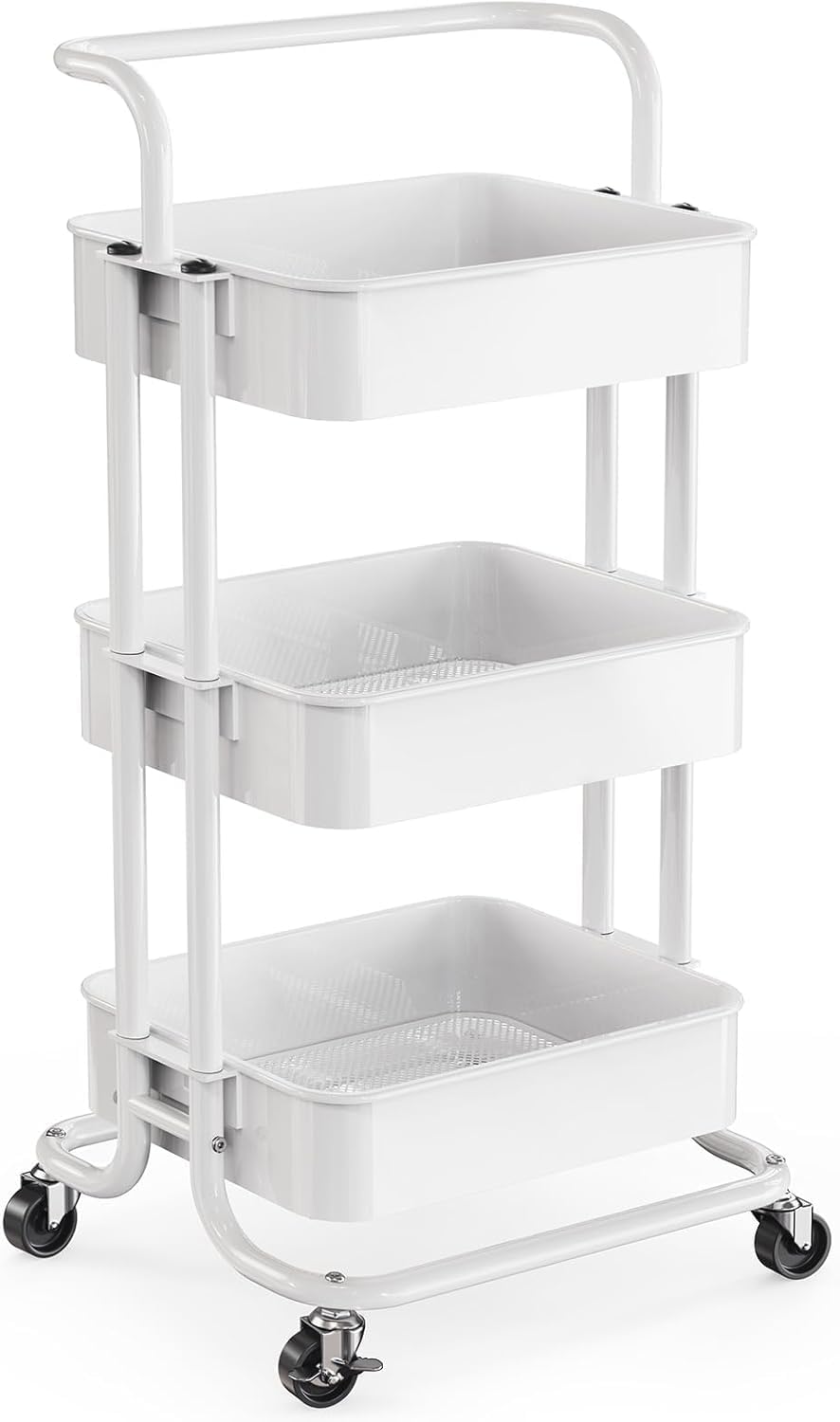
There is a tendency in chronic illness management to frame convenience as a luxury — something you resort to when you can no longer manage "normally," rather than something you deploy strategically because you understand what is actually happening in your body. A rolling cart positioned at the bedside and moved through the house throughout the day is not a comfort item. It is a pacing tool. And pacing, in the context of ME/CFS and dysautonomia, is the closest thing the evidence base has to an active management strategy for the pattern of activity-induced collapse that defines these conditions.
What Post-Exertional Malaise Actually Is
Post-exertional malaise (PEM) is the hallmark feature of ME/CFS and occurs frequently in dysautonomia as well. The term underrepresents what it describes. PEM is not fatigue that gets worse with activity, in the way a healthy person's muscles tire after a workout. It is a systemic physiological crash — often delayed 12 to 48 hours after the triggering exertion — characterized by a profound worsening of all symptoms: cognitive impairment, pain, orthostatic intolerance, sensory sensitivity, and a functional collapse that can persist for days or weeks.
The critical feature of PEM that makes pacing non-obvious to most people is that the triggering exertion is often trivial by any conventional standard. Walking from the bedroom to the kitchen. Bending down to retrieve something from the floor. Standing to answer the door. Activities that cost a healthy person nothing can push an ME/CFS patient across the threshold that initiates a crash. This is not a matter of willpower or pain tolerance — exercise intolerance in ME/CFS is a blood flow and oxygen delivery problem at the cellular level. The physiological cost of exertion in this population is measurably higher than in controls, and the recovery systems are impaired.
Pacing: The Evidence-Based Framework for Activity Management
Pacing is the systematic management of activity within an individual's energy envelope — the range of exertion that can be sustained without triggering PEM. It is not rest. It is not giving up. It is the deliberate allocation of a limited physiological resource to preserve function and avoid the crash cycles that gradually erode baseline capacity over time.
The alternative to pacing — pushing through symptoms, attempting to build tolerance through repeated exposure to exertion — has been studied directly in ME/CFS and found to worsen outcomes for most patients. The research on how inactivity affects the autonomic systems required for standing is real and important — deconditioning is a genuine problem that needs to be addressed — but in ME/CFS specifically, the answer is carefully structured reconditioning within the energy envelope, not unsupported push-through exercise that triggers PEM cycles.
Pacing requires accurately accounting for exertion. This is harder than it sounds. Micro-exertions — the constant small movements that constitute ordinary daily life — are invisible to conscious accounting but not to the physiological systems that track energy expenditure. The walk to the kitchen for medication. The trip back for the phone charger. The second trip for the water bottle. The third trip for the snack. Each is minor. Cumulatively, in a person operating close to their energy ceiling, they are not.
A Rolling Cart as a Pacing Infrastructure Tool
The strategic insight behind a bedside rolling cart is not that it reduces effort — it is that it consolidates effort that would otherwise be distributed across dozens of unnecessary micro-movements throughout the day. A cart stocked in the morning with medications, water, food, phone and charging cable, notebooks, and whatever other items will be needed becomes a self-contained management station. It moves with you from the bedroom to wherever you need to be, without generating a separate trip for each item it carries.
This is infrastructure for pacing, not convenience. The difference matters because it changes how you think about and justify the tool. Convenience is discretionary. Pacing is a management approach for a physiological problem. A cart that eliminates fifteen unnecessary walks through the house in a day has reduced exertion that would otherwise compete with whatever genuine activity — upright time, rehabilitation exercise, meaningful engagement — you have allocated your energy toward.
For patients managing both ME/CFS and POTS simultaneously, the orthostatic dimension adds another layer. Every unnecessary trip to another room is not just metabolic expenditure — it is additional orthostatic time with an already-compromised cardiovascular system. Consolidating supply retrieval into a single movement event, rather than multiple upright episodes, directly reduces the orthostatic load imposed by daily logistics.
What to Stock and How to Use It
The Pipishell rolling cart offers three tiers with lockable wheels — the locking mechanism matters because a cart that drifts while you are trying to retrieve something from it is not useful. The tiers allow you to organize by priority and frequency of access: top tier for items used constantly (phone, water, medications), middle tier for items used regularly (food, notebook, remote controls, charger), bottom tier for supplies accessed less often (extra medications, medical equipment, reading materials).
Restock the cart once per day — ideally in the morning before the day begins, or at whatever time your function is best. A single restocking episode, done while relatively functional, is physiologically cheaper than multiple retrieval episodes throughout the day when you may be less capable. This is pacing applied to the logistics of the cart itself.
The goal is not to never move. Movement, within tolerance, is part of a healthy management plan — and the evidence strongly supports carefully graduated upright activity as part of long-term reconditioning. The goal is to ensure that when you do move, it is because you have chosen to, not because the house requires it. Energy that would have gone to retrieving a water bottle stays available for movement that serves recovery. That is what pacing infrastructure is for.