

Normatec Compression Therapy for POTS and Dysautonomia — Is It Worth It?
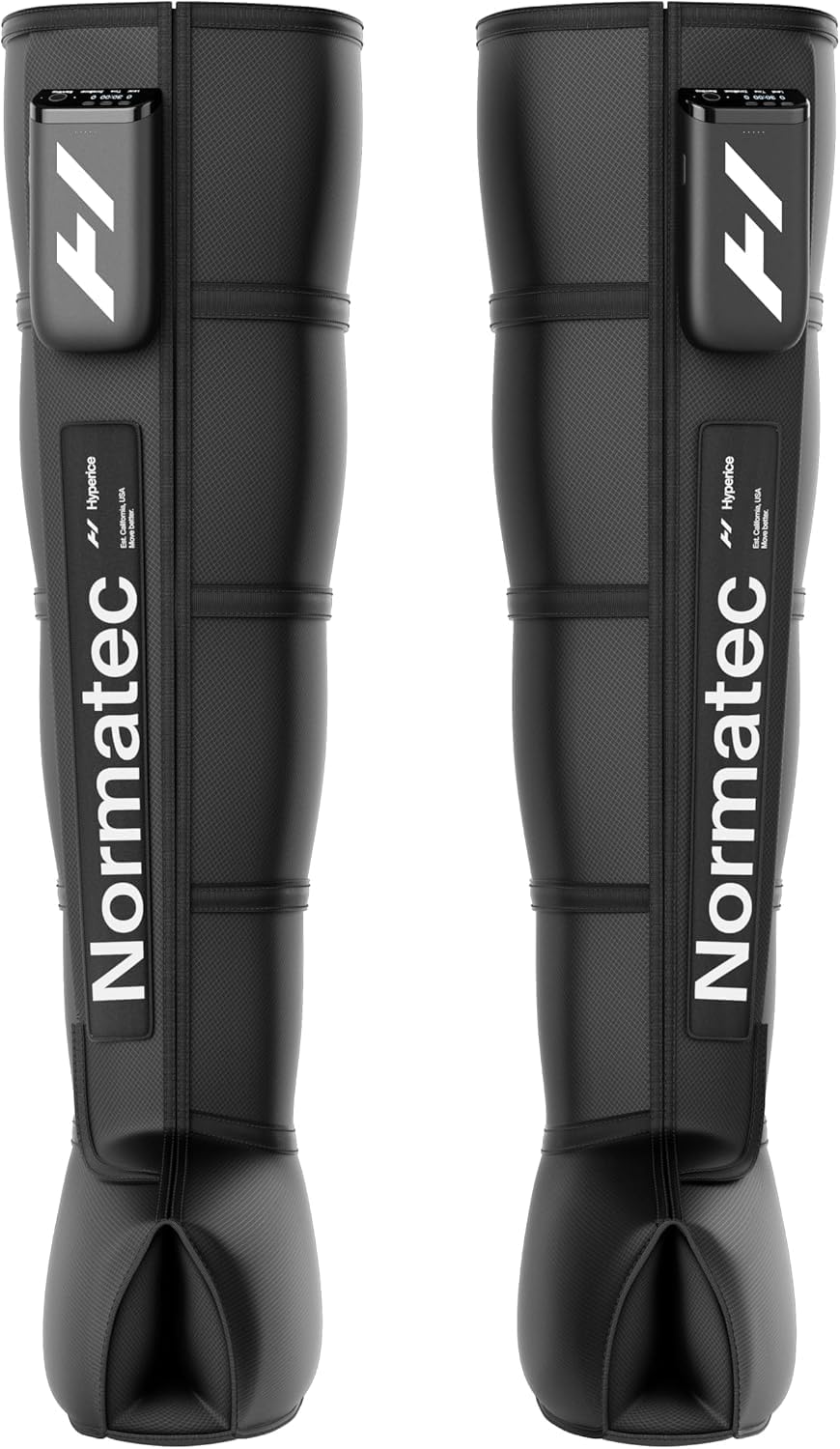
The Hyperice Normatec Elite represents a categorically different intervention than compression socks or stockings. Where static garments provide continuous, passive counter-pressure, the Normatec uses sequential pneumatic compression — chambers that inflate and deflate in a coordinated wave pattern from foot toward hip — to deliver an active, rhythmic stimulus. For people managing POTS, dysautonomia, or ME/CFS-related exercise intolerance, the use case is distinct: this is primarily a recovery and post-exertion tool, not an upright-activity support garment.
The investment is substantial. Whether it's worth it depends almost entirely on whether you're a candidate for the specific mechanism it provides.
Sequential Pneumatic Compression: A Different Mechanism
Static compression garments work primarily through sustained proprioceptive enrichment — they modify the sensory input that the brain's regulatory circuits receive from the peripheral body during standing, supporting more accurate autonomic output. Sequential pneumatic compression like the Normatec operates through a different mechanism: it applies rhythmic, patterned pressure sequences to the limb that actively stimulate the mechanoreceptors and vascular structures in a dynamic, time-varying way.
This rhythmic stimulation is thought to support lymphatic and venous return not by brute mechanical force — the pressure levels in pneumatic recovery boots are not high enough to simply override vascular physiology — but by providing a patterned proprioceptive and mechanoreceptive input that the nervous system can process and respond to. The sensory signal is richer and more time-structured than static compression allows, and it is delivered while the patient is recumbent, which eliminates the gravitational orthostatic component entirely.
Post-Exertion Recovery in Dysautonomia
Exercise intolerance is one of the most disabling features of POTS and ME/CFS. The mechanisms overlap: impaired cerebral blood flow during exertion, deficient cardiac output response, deconditioning-related reductions in plasma volume, and post-exertional malaise that can persist for hours or days after even modest activity. Exercise is one of the most evidence-supported interventions in dysautonomia management precisely because it expands plasma volume and reconditions the cardiovascular system — but getting to the point where exercise is tolerable is itself a challenge.
The Normatec's value in this context is as a recovery acceleration tool. Used immediately post-exercise in a recumbent position, sequential pneumatic compression reduces the post-exertional autonomic burden during the recovery window. The rhythmic sensory input it provides appears to support more rapid normalization of peripheral vascular tone after the acute orthostatic stress of exercise. For patients who are building a conditioning program and experiencing significant post-exertional symptoms that delay recovery between sessions, this can reduce the inter-session interval and allow more consistent training progression.
ME/CFS and Post-Exertional Malaise
For patients with comorbid ME/CFS — where post-exertional malaise is a defining and often severe feature — the calculus around any intervention is more complex. The goal in this population is to support what activity is possible without triggering disproportionate delayed reactions. Pneumatic compression used passively and recumbently does not itself constitute exercise. It is a passive sensory and circulatory stimulus that can be applied during rest periods without demanding metabolic output from the patient.
This matters because the standard compression strategy — wearing leg garments while upright and active — may itself be a mild stressor in severely affected ME/CFS patients. The Normatec offers an alternative: a recumbent, passive intervention that provides meaningful peripheral vascular stimulus without requiring the patient to be upright or exerting.
Who Is the Normatec Actually For?
Honest assessment: the Normatec is not a universal recommendation. At its price point, it is an investment that makes sense for a specific patient profile. The ideal candidate is someone who is actively building a physical conditioning program, experiences significant post-exertional symptom burden that limits training frequency, and has already exhausted the benefit of static compression garments for upright activity support.
The core problem in orthostatic intolerance is a brain perfusion deficit that emerges during upright posture — and the Normatec does not address that deficit while standing. It is a recovery tool, not an orthostatic support tool. Patients who are primarily looking for help staying upright throughout the day will not get that from pneumatic boots used while lying down.
For patients who are further along in their rehabilitation — who can tolerate regular activity but are limited by slow recovery between sessions — the Normatec addresses a genuine unmet need. It is used by professional athletes specifically because post-exertional recovery is a rate-limiting factor in training progression. In dysautonomia, where the post-exertional recovery curve is pathologically prolonged, this matters proportionally more.
Practical Use Protocol
Use the Normatec post-exercise, in a recumbent or semi-recumbent position, for 20-30 minutes per session. Start with the lowest effective pressure setting and adjust based on tolerance — the goal is rhythmic sensory stimulation, not high-intensity mechanical compression. Many users find a moderate pressure level most effective; maximum pressure is not the target. Do not use immediately before upright activity, as the acute peripheral vasodilation that follows pneumatic compression may briefly worsen orthostatic tolerance in the minutes after use.
Consistency matters more than session intensity. Regular use as part of a structured rehabilitation routine provides cumulative benefit. Sporadic use during acute flares is less useful than systematic integration into a conditioning program built around the principles of avoiding deconditioning and progressively rebuilding orthostatic tolerance.