

Best Book on the Autonomic Nervous System for POTS and Dysautonomia Research
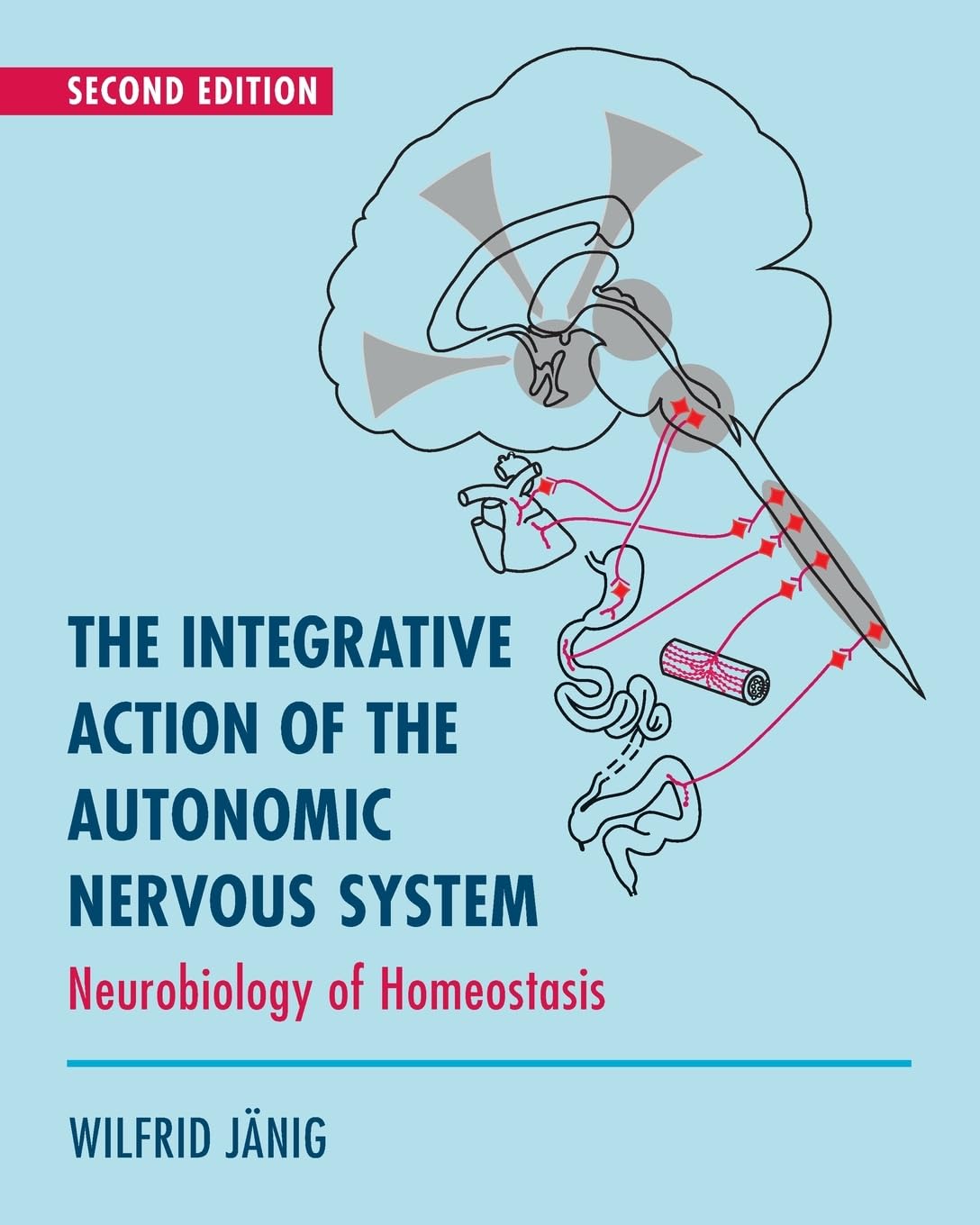
If you want to understand the autonomic nervous system at the level researchers and clinicians use, there is one book that serves as the foundation: Wilfrid Jänig's Integrative Action of the Autonomic Nervous System, published by Cambridge University Press. This is the book cited when precision matters. It is not a patient guide, and it is not casual reading. It is a graduate-level neuroscience textbook written by one of the world's leading authorities on autonomic function — and for patients, caregivers, or clinicians who want to understand the science of dysautonomia from the ground up, there is nothing more complete.
Who Jänig Is and Why It Matters
Wilfrid Jänig spent decades as a researcher at the University of Kiel, Germany, studying the organization of sympathetic and parasympathetic pathways at a systems level. His work is distinguished by its insistence on integration — not just cataloguing what individual neurons do, but explaining how the autonomic nervous system coordinates across organs, tissues, and regulatory demands simultaneously. That integrative perspective is precisely what is missing from most explanations patients receive about their conditions.
The result is a text that treats the autonomic nervous system as what it actually is: a distributed regulatory architecture, not a simple on/off switch. This framing matters clinically. It explains why dysautonomia symptoms are so variable, why they affect multiple organ systems at once, and why simple interventions sometimes work and sometimes don't.
What the Book Covers
The text is organized around the major functional divisions and regulatory roles of the ANS. Jänig covers the anatomy and physiology of sympathetic and parasympathetic outflow pathways in detail — not as isolated structures, but as coordinated systems serving specific regulatory functions. Cardiovascular control receives extensive treatment: how the heart rate, vascular tone, and blood pressure are regulated moment to moment, and how those regulatory signals are generated and refined at multiple levels of the nervous system.
The chapters on organ-specific control are particularly valuable for anyone trying to understand why dysautonomia produces such a wide symptom profile. The ANS governs not just the heart and vasculature, but the gastrointestinal tract, the bladder, sweat glands, the eyes, and the immune system. When the regulatory architecture becomes miscalibrated, symptoms can appear across any of these systems — not because multiple diseases are present, but because one regulatory system is not performing accurately.
Jänig also addresses the intersection of autonomic function with pain — a topic of direct relevance for patients with conditions like fibromyalgia or EDS where pain and autonomic symptoms overlap. The treatment of pain modulation through autonomic pathways helps explain why central sensitization and autonomic dysfunction so often appear together.
Understanding the ANS as a Regulatory Architecture
One of the core insights Jänig develops throughout the book is that autonomic responses are not reflexes in the simple sense — they are context-dependent, state-dependent outputs shaped by higher brain centers including the hypothalamus, brainstem, and cortex. The brain is constantly interpreting internal signals and generating regulatory responses that attempt to keep the body's internal environment within appropriate bounds.
This is the architecture described in the site's coverage of how the brain reads internal body signals through the autonomic system. The concept of interoception — the brain's continuous monitoring of the body's internal state — is not separate from autonomic control; it is part of the same system. Understanding how the brain generates autonomic output from interoceptive signals helps make sense of why dysautonomia is not simply a peripheral nerve problem.
Who Should Read This Book
Be honest with yourself about difficulty level before purchasing. This is a graduate neuroscience textbook. It assumes familiarity with basic neuroanatomy, physiology, and scientific terminology. Chapters are dense with mechanistic detail, and the writing style is technical throughout. It is not a book you read from cover to cover casually.
That said, it is accessible by section. A patient who wants to understand what the sympathetic nervous system actually does — not the oversimplified fight-or-flight summary, but the full regulatory picture — can read the relevant chapters and come away with a genuine understanding. The same is true for caregivers who want to understand why their family member's symptoms are so variable and widespread, or for clinicians who treat these patients and want a deeper physiological foundation than they received in training.
For clinicians, particularly those in cardiology, neurology, or internal medicine who are increasingly encountering patients with POTS, dysautonomia, or ME/CFS, Jänig provides the scientific grounding that connects clinical presentations to underlying physiology. The cardiovascular regulation chapters are particularly useful for understanding why tilt-table findings look the way they do and what they reflect about underlying regulatory function.
The Bigger Picture
The value of a text like this goes beyond its contents. Understanding that the autonomic nervous system is a regulated, hierarchical, context-sensitive system — rather than a simple binary switch — changes how patients relate to their own symptoms. Variability stops being mysterious. The influence of stress, sleep, posture, and ambient temperature on symptom severity becomes mechanistically legible rather than arbitrary.
This is the scientific foundation that makes sense of why dysautonomia research consistently points toward a miscalibrated regulatory system rather than isolated organ pathology. Jänig built that foundation. This book is where it lives.