
Essentials of the Brain — Rudolph Hatfield
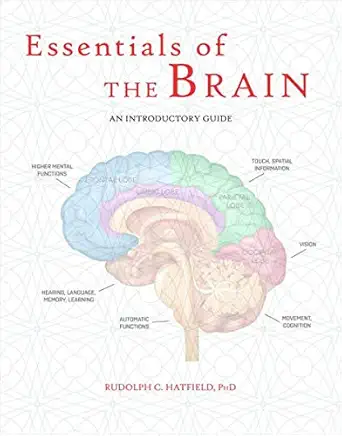
Understanding why dysautonomia produces the symptoms it does requires understanding how the brain works — not at a superficial level, but at the level of how the brain generates and regulates the body's internal state. Rudolph Hatfield's Essentials of the Brain is the most accessible entry point into that understanding. It covers the core structures, functions, and regulatory systems of the brain in plain language, without requiring a background in neuroscience.
This is where to start if the Jänig textbook feels like too large a leap, or if you want a foundation before engaging with the mechanistic research on cerebral blood flow, baroreflex function, and autonomic regulation that this site covers.
Why Brain Anatomy Matters for Dysautonomia
The standard explanation of POTS and dysautonomia focuses on the heart and blood vessels — the heart rate goes up, the blood pressure doesn't compensate, blood pools in the legs. This account isn't wrong, but it's downstream. The autonomic nervous system that governs all of that is itself governed by the brain — specifically by the hypothalamus, brainstem nuclei, and cortical networks that generate and continuously adjust the body's regulatory outputs.
When those brain structures are miscalibrated — whether from prior illness, stress, structural issues, or any number of other causes — the signals they send to the heart and vasculature are imprecise. Understanding the brain structures involved helps make sense of why dysautonomia is so variable, why cognitive symptoms are part of the picture, and why recovery so often requires interventions that target the nervous system rather than just the cardiovascular outputs.
What the Book Covers
Hatfield covers the major brain regions and their functions: the brainstem (where most autonomic control originates), the cerebellum, the limbic system, the hypothalamus, the cortex, and the interconnections between them. He explains how these structures communicate, how they contribute to consciousness, emotion, memory, and regulatory function, and how damage or dysfunction in specific areas produces specific patterns of symptoms.
The sections on the brainstem are directly relevant to anyone with dysautonomia. The brainstem houses the cardiovascular control centers, the respiratory control centers, and the nuclei that integrate autonomic output with sensory input from the body. Understanding what the brainstem does — and what happens when it doesn't do it precisely enough — reframes dysautonomia from a vague systemic problem into a specific, locatable regulatory failure.
The Right Difficulty Level
This book sits at the right level of challenge for most patients with dysautonomia who want to understand their condition more deeply. It is introductory without being condescending. It uses accessible language without stripping out the mechanistic content. It is the kind of book that, once read, makes the research literature meaningfully more interpretable.
Read it before or alongside the research on how the brain reads internal body signals through the autonomic system and why brain blood flow drops before heart rate rises in POTS. The anatomy Hatfield explains provides the physical context for the physiological findings those papers describe.
Who This Is For
Patients who feel they are absorbing clinical information about their condition without a conceptual framework to hang it on will find this book fills that gap. Caregivers who want to understand why dysautonomia produces cognitive symptoms alongside physical ones will find it here too. Clinicians coming to this area from cardiology or internal medicine who want to understand the neuroscience underlying what they observe on tilt tables will find an efficient grounding.
It is not a dysautonomia book specifically — it is a neuroscience introduction. That is precisely its value. It builds the foundation that makes dysautonomia, understood as a brain-regulated problem rather than a heart problem, fully legible.