

Abdominal Binder for POTS — Splanchnic Compression Explained
For many patients with POTS and orthostatic intolerance, leg compression is the first tool introduced — and for good reason. But leg compression alone doesn't address one of the most significant contributors to orthostatic symptoms: the behavior of the splanchnic circulation during standing. An abdominal binder is a more targeted intervention that addresses this specific physiological territory directly, and for some patients it outperforms leg compression precisely because it hits the right target.
The Splanchnic Circulation and Why It Matters in POTS
The splanchnic vascular bed encompasses the blood vessels that supply the gastrointestinal tract, liver, spleen, and pancreas. It is one of the largest capacitance regions in the human body, capable of holding a substantial fraction of total circulating blood volume. Under normal conditions, the autonomic nervous system coordinates active vasoconstriction of this bed during the transition from lying to standing, preventing excessive sequestration of blood volume in the abdominal vasculature during orthostatic stress.
In dysautonomia, this coordination is impaired. The regulatory output that should constrict the splanchnic vessels during standing is delayed, attenuated, or inaccurate in amplitude. The result is that more blood volume remains sequestered in the abdominal vascular bed while upright than the cardiovascular system can readily compensate for. This is not passive pooling due to gravitational pressure — it is a regulatory failure. The problem in POTS is where blood goes and why the system isn't directing it correctly, not simply a question of total volume.
What an Abdominal Binder Does
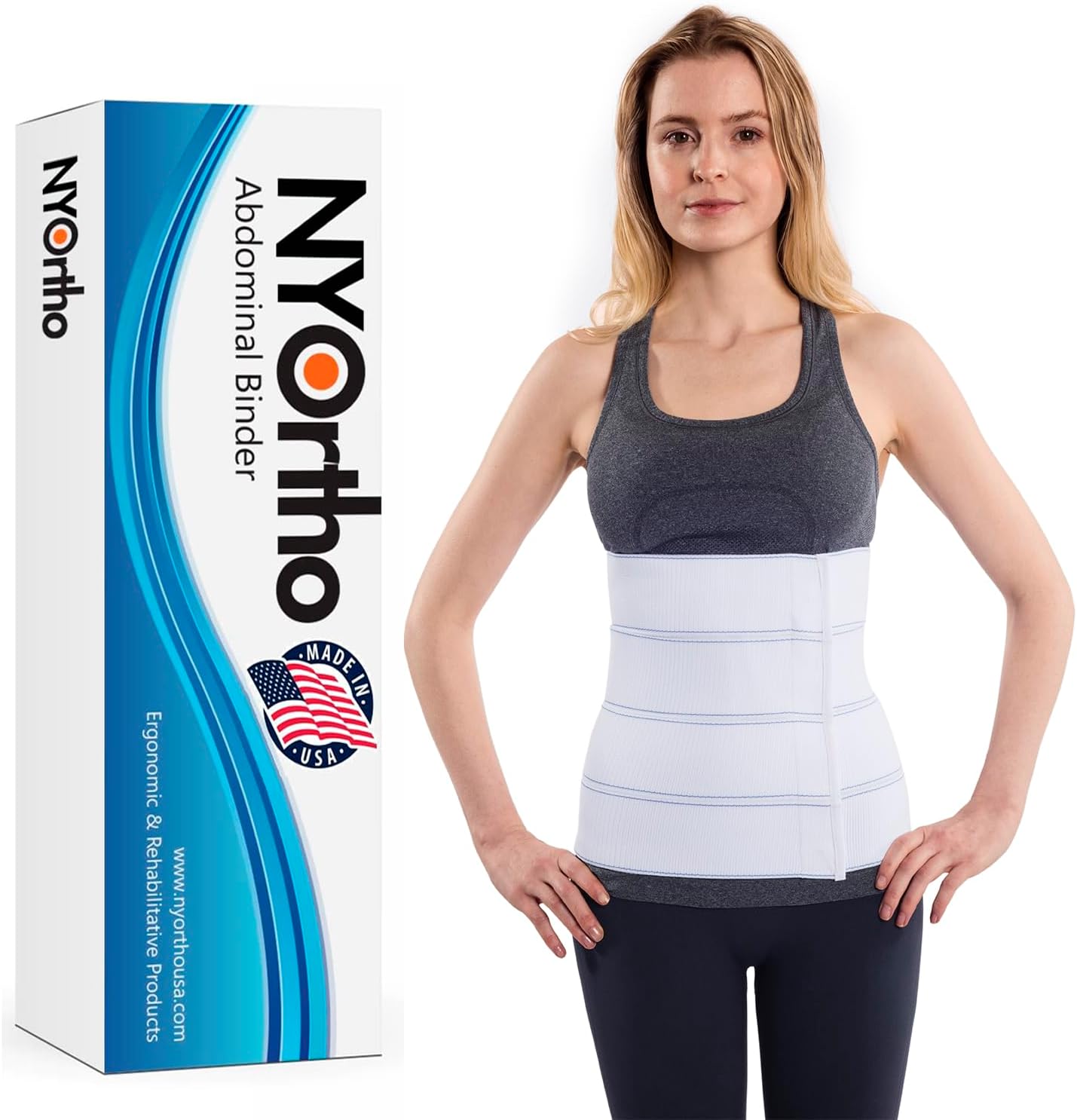
An abdominal binder applies firm, adjustable external counter-pressure to the lower abdomen and flanks — the anatomical region overlying the splanchnic vascular bed. By mechanically reducing the available volume within the abdominal cavity, it limits the degree to which the splanchnic vasculature can accommodate blood during standing, regardless of the quality of the autonomic output that would normally regulate it.
This is a different mechanism from what leg compression achieves. Leg compression primarily works through enriched proprioceptive and sensory feedback to the brain's body map, improving the accuracy of regulatory output directed at the peripheral vasculature. Abdominal compression is more directly mechanical — it physically constrains the vascular space available in a region where regulatory impairment is most consequential.
Some patients will find that abdominal compression alone provides more relief than leg compression alone. Others will find the combination more effective than either intervention independently. The appropriate approach depends on where the primary regulatory burden is concentrated in a given individual.
Recognizing Splanchnic-Dominant Orthostatic Intolerance
Several clinical patterns suggest that the splanchnic bed is a primary driver of orthostatic symptoms in a given patient. Post-meal worsening — symptoms that markedly increase after eating — is one of the most common indicators. Digestion dramatically increases splanchnic blood flow demand; in a patient with dysautonomia, this can overwhelm the already-impaired regulatory capacity and precipitate acute symptom flares.
Early satiety, abdominal bloating that worsens with standing, and symptoms that improve dramatically when lying flat within minutes rather than gradually over time are also consistent with a significant splanchnic component. Patients who find that leg compression alone provides only marginal benefit should consider whether abdominal compression addresses a target that leg compression is missing.
Fitting and Wearing an Abdominal Binder
An abdominal binder should wrap the lower abdomen — from the hip crests upward to roughly the level of the navel — with consistent, firm pressure across the full circumference. Too loose and the counter-pressure is insufficient; too tight and it compresses the lower ribs, restricts diaphragmatic movement, and potentially worsens the postural hyperventilation that is already a risk in orthostatic dysautonomia.
Postural hyperventilation contributes meaningfully to POTS symptom burden and is often worsened by anything that restricts normal thoracic and diaphragmatic breathing. Position the binder below the lower ribs, ensure that taking a full breath does not feel impossible, and adjust the tension to be firm without being restrictive at the respiratory limit.
Put the binder on before rising, as with all compression garments. Wear it throughout upright hours and remove it when recumbent. Adjustable velcro closures make tension adjustment straightforward during the day as needed.
Integration with Broader Dysautonomia Management
An abdominal binder is most effective as part of a layered management approach. Orthostatic intolerance at its core is a brain perfusion problem — the regulatory failure affects cerebral blood flow, and the downstream consequences extend far beyond the abdomen. Abdominal compression reduces one significant contributor to the regulatory burden, but it does not address the others: deconditioning, blood volume, baroreflex sensitivity, or the quality of the brain's overall autonomic output.
Used alongside appropriate physical conditioning, hydration and sodium management, and medical therapy where indicated, abdominal compression is a practical, low-cost, and immediately usable tool that targets a physiological mechanism that many patients and providers overlook.